“Developing antibiotics is not profitable, hence the crucial role of universities.”
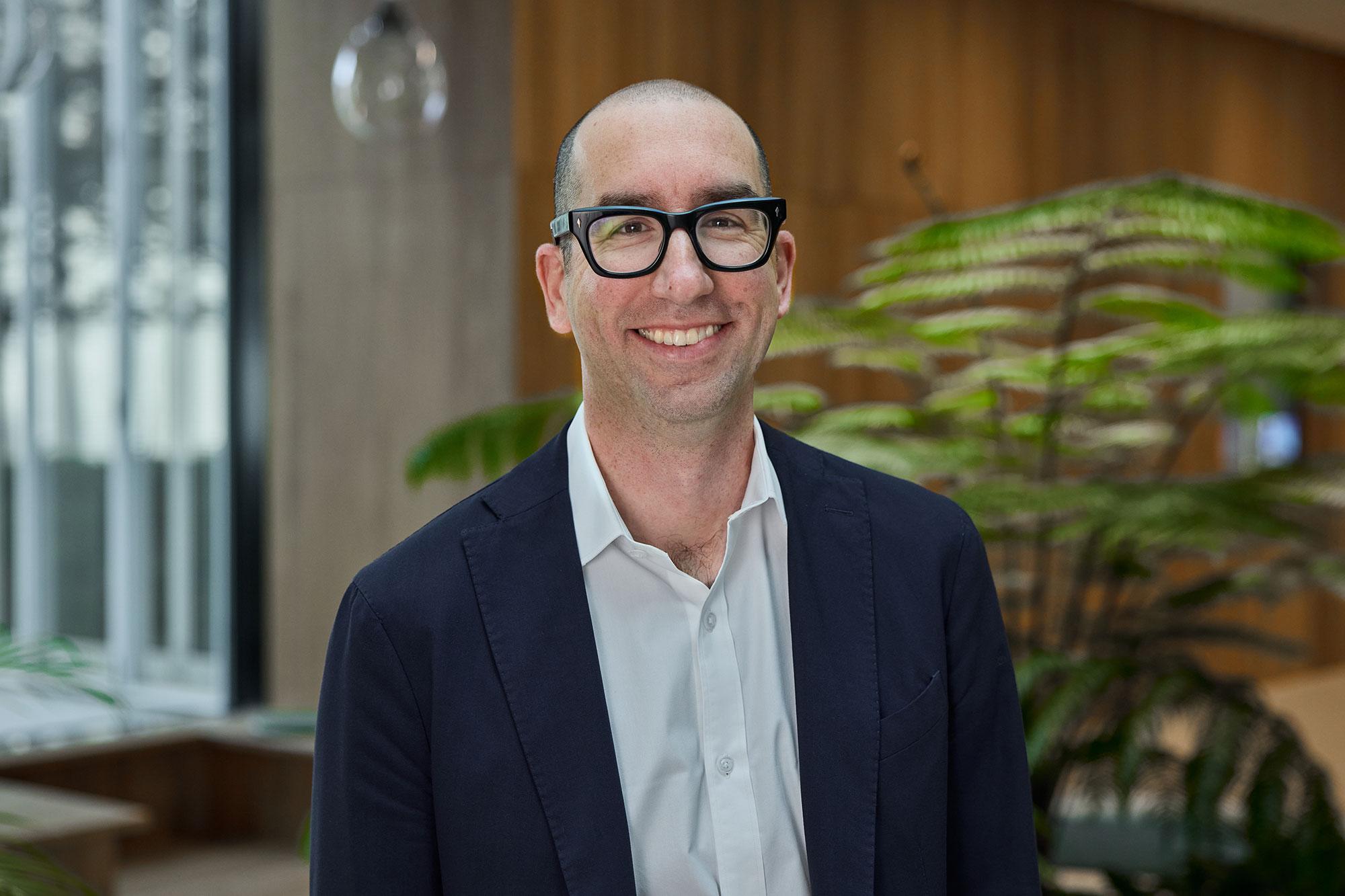
The Head of Infectious Diseases at Roche discusses the medical and socio-economic challenges associated with antibiotic resistance. He emphasises the vital role of basic research in this fight.
The pharmaceutical and life sciences sector is one of Switzerland’s strongest economic pillars, accounting for almost 40% of Swiss exports and investing heavily in research and development. Successfully developing a single new medicine is therefore not only a scientific breakthrough, but also a coordinated effort in long-term investment, human resources and strategy – creating value for patients and society as well as for the economy.
In a conversation with the SNSF, Michael Lobritz explains why new drugs are urgently needed to combat antibiotic resistance and why their development depends on basic research.
Michael Lobritz, you are currently the Head of Infectious Diseases at Roche Pharma Research and Early Development. Before that, you worked as a medical doctor and as a researcher in the field of infectious diseases. What role does basic research play in the development of new medicines?
Basic research is the foundation of everything. What companies like Roche do is sometimes misunderstood when mistakenly compared with academia. Academic research is about discovery – uncovering new biological mechanisms. Pharmaceutical research is about creation – taking those discoveries further and turning them into usable therapies. The two are complementary, and I like to think of this as “basic applied science,” bridging discovery and creation.
Can you give a concrete example?
The discovery and development of penicillin is the classic case. Many know the story of the English scientist Alexander Fleming, who in 1929 observed that mold on a forgotten culture plate killed nearby bacteria. That was a remarkable discovery, but it was not yet a medicine. Penicillin only became available to the public in the mid-1940s.
What happened in between?
It took more than a decade until Howard Florey and colleagues at Oxford proved the efficacy of the purified substance and developed methods to purify and manufacture penicillin at a scale that was safe and effective for patients. This collaboration illustrates how basic and pharmaceutical research complement each other: One identifies the underlying mechanisms, the other translates them into a practical therapy.
The journey of penicillin underlines the importance of sustained support for basic research. Institutions such as the Swiss National Science Foundation play an important role in fostering and enabling this early-stage work, which provides the basis on which later medical breakthroughs can be built.
Is a strong scientific foundation especially critical in infectious diseases?
It is essential across all areas, but infectious diseases have special characteristics. New pathogens emerge, and old ones reappear in resistant forms. This constant evolution means we must always innovate.
Is there a lack of innovation in some areas of infectious diseases?
Yes. And underinvestment in basic science for certain pathogens creates gaps when medicines are urgently needed. Covid-19 was a reminder of how decades of research can suddenly prove vital: The rapid development of mRNA vaccines was possible only because the underlying science had been built up over many years.
This shows how basic research lays the foundation for future innovation. Because developing a new medical technology can take up to 15 years, we must already think today about the medical needs of 2040.
How important are antibiotics for modern medicine?
It’s hard to overstate their importance – and, with that, the importance of the basic research that made them possible. Antibiotics are so deeply embedded in healthcare that they are almost invisible, yet they underpin much of modern medicine. On any given day in a hospital, as many as half of all patients receive antibiotics; in intensive care units, the figure can exceed 90 percent.
Antibiotics were among the first medicines that truly transformed healthcare, and every advance since has been built on top of them. They keep patients who would otherwise be left vulnerable to severe infections by other interventions – from cancer therapy to transplantation – alive. The absence of antibiotics would cripple our entire healthcare ecosystem. Society itself would no longer be able to function.
So, are we heading towards a major public health crisis if antibiotic resistance is not addressed?
Already today, doctors sometimes face patients they can no longer cure. Without continuous innovation, we risk returning to a time when even common infections or minor surgeries could prove fatal. Imagine not being able to cure a simple infection because no antibiotic works – that is the scenario we must prevent. Antibiotics are not optional add-ons; they are essential to healthcare.
At the same time, innovation in antibiotics is limited compared with other therapeutic areas. Only a few companies still invest heavily in early-stage antibacterial research. That reflects not a lack of scientific opportunity, but a challenging commercial environment.
What conditions are needed to ensure that basic research continues to translate into effective therapies?
In this field, stewardship is vital: Every antibiotic has a lifecycle, and the aim is for any new one to remain effective for decades, safeguarding public health. As new antibiotics, unlike other drugs, should be reserved for the sickest patients and used sparingly, developing them is not economically profitable.
This is where academia plays a crucial role: Universities and public research institutions can pursue non-profitable research and deepen our understanding of antibiotic mechanisms, forming the scientific foundation on which future therapies depend. Also, incentives from governments and agencies are especially important. They are of two main types: Push incentives reduce the cost and risk of research and development, supporting both successes and failures, while pull incentives reward successful innovation after approval – for example through market entry rewards or purchase guarantees.
How do you translate research into a new antibiotic? Where do you start?
The starting point is our scientific foundation and long history in anti-infectives, from tuberculosis onwards. For this, collaboration with academia is crucial.
For our new antibiotic candidate Zosurabalpin, which will soon enter Phase III trials (large-scale studies to confirm safety and effectiveness before approval), we knew it could kill bacteria but not how. By partnering with a Harvard laboratory rooted in basic research on bacterial memory mechanisms, we were able to understand precisely how the substance works and to identify its completely novel target. This shows how basic research and industrial development together can deliver genuinely new therapies.