Cookware and high tech
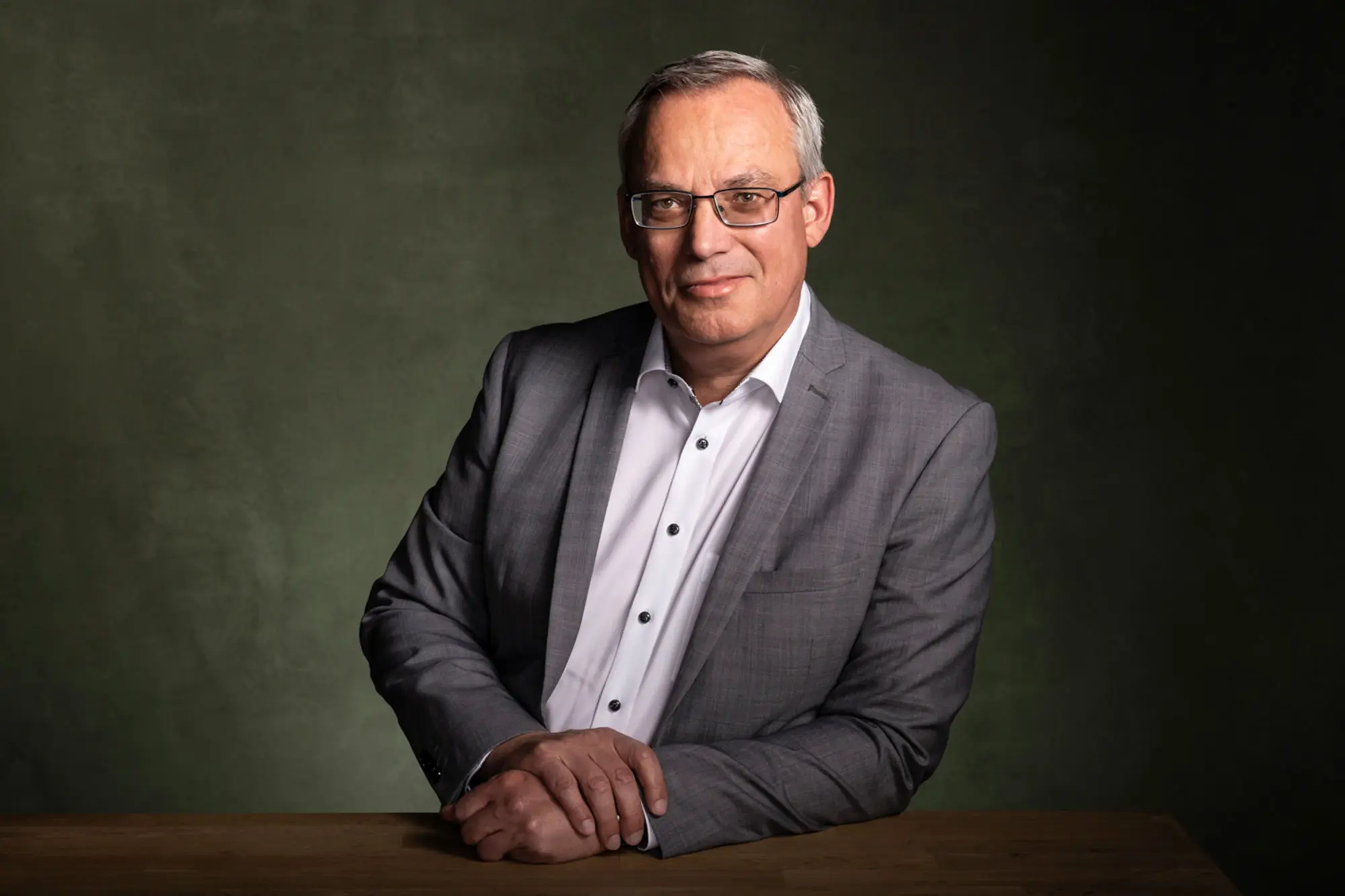
When it comes to the development of its product range and sustainability, the pot and pan manufacturer Kuhn Rikon relies on its close connection to basic research. Without it, nothing would work, says CEO Tobias Gerfin.
Tobias Gerfin actually had planned to pursue an academic career. After graduating with a degree in chemistry, he applied for a research grant from the Swiss National Science Foundation (SNSF). His application was rejected, and Gerfin went into the private sector, but he always remained interested in science. He joined Kuhn Rikon as CEO in 2013. "Ever since then," says Gerfin, "the study of materials science has been an integral part of my job description."
Over 50 percent export share
Pans, pots and other kitchen utensils have been produced in Rikon (Zurich) since 1899 – and specifically with the Kuhn Rikon brand name for exactly 100 years. Kuhn Rikon operates its own sales offices in Germany, Spain, the UK and the USA. Exports account for a good 50 percent of sales. The company employs a total of 270 people, 130 of whom work in the rural Töss Valley.
The Kuhn Rikon brand is well established. Sales are growing continuously. However, this strong position is not a forgone conclusion, emphasises Tobias Gerfin: "We stand for sustainability and Swiss quality. Living up to this claim requires lot of work." Existing products are constantly being improved: for example, the steel pans that tended to discolour on induction hobs. Kuhn Rikon turned to academic research and launched a materials science project with the Lucerne University of Applied Sciences and Arts. The problem has now been solved.
Innovation plus sustainability
The launch of new products based on technical and scientific progress also serves to promote the brand. Kuhn Rikon presented its latest innovation with its development partner Miele last September: a pan that communicates with the stove via Bluetooth.
In parallel with the development of its product range, Kuhn Rikon is honouring its commitment to sustainability. Its CO2 footprint has shrunk by 50 percent since 2022, adjusted for sales. This was made possible by closing an extremely energy-intensive material cycle. The aluminium pans from the Töss Valley are made from 100 percent recycled materials.
The next recycling project concerns the heat-resistant synthetic resin used to make many pot and pan handles. Bakelite is currently incinerated as part of the disposal of used pans. An initial attempt with the Plastics Training and Technology Centre (KATZ) to recover the material failed.
But giving up is not an option. Gerfin relies on the creativity of the scientific community. He is confident that it will find recycling processes for most industrially used materials and develop them to be market ready. He is convinced that "in the long term, we will hardly need any primary raw materials here in Rikon."
The problem with polytetrafluoroethylene
And finally, there is the issue of polytetrafluoroethylene, better known as PTFE or Teflon. It hangs like a dark shadow over the entire industry, because PTFE belongs to the controversial group of per- and polyfluorinated alkyl compounds (PFAS).
At present, PTFE is unbeatable as a non-stick coating. The chemist Gerfin goes into raptures: "Fluorine is monogamous. Hardly any other element is so reluctant to form new connections." Fluorine-coated carbon chains repel water, oils and fats even at high temperatures.
PTFE shares its high chemical resistance with many fluorinated polymers. PFAS owe their name 'eternity chemicals' to this so-called persistence, which is also what gives rise to health concerns. Once released into water or soil, PFAS accumulate and eventually enter animal and human food chains. Chronic exposure to certain PFAS is associated with immune system disorders, elevated cholesterol levels, carcinogenic effects and reproductive impairment.
The Federal Government therefore recently set new maximum levels for meat, eggs and fish. The EU wants to go one step further. In 2023 the European Chemicals Agency published a restriction proposal that aims to ban PFAS from industrial products and processes. The consultation process is ongoing. It will not be known until the end of 2026 at the earliest which sectors will be affected by a complete ban.
"We hope that there will be an exception for PTFE," says Tobias Gerfin. His argument is that PTFE is hardly soluble in water and, unlike many short-chain PFAS – such as those found in synthetic clothing and food packaging – it is not mobile.
Nevertheless, preparation is everything. Rikon has been working on the subject of PTFE substitution for years, partly because Teflon coatings are by no means perfect. They are susceptible to scratches and have shorter lifespans compared to stainless steel products.
Lotus effect on pan bases
Gerfin and his employees have already tried out many things. Together with researchers from Empa in Dübendorf, they considered processing the pan steel with lasers. The aim is to create a physical non-stick structure – a so-called lotus effect.
At PSI in Villigen, Gerfin discussed alternative materials based on rare earths. He spoke to research institutes of the Fraunhofer-Gesellschaft in Germany about the potential of two-dimensional carbon, known as graphene. Gerfin estimates that "more than 1000 projects have already been launched worldwide with the aim of finding coatings with the non-stick properties of Teflon."
Should PTFE fall under a strict release ban, an 18-month transitional period would come into effect. Teflon-coated cookware would then no longer be allowed to be sold in the EU. "That would be a bitter blow for our industry," explains Gerfin, "the investments in new production facilities alone would be considerable."
But Gerfin is confident: "We are pinning our hopes on basic research." As soon as a genuine PTFE alternative emerges, he wants to be among the first users.
The 60-year-old CEO of Kuhn Rikon invests around 15 percent of his working time in the procurement and processing of technical information. He reads scientific publications, takes part in workshops and conferences, and exchanges ideas with the leaders of technology transfer centres at Swiss higher education institutions.
He visibly and audibly enjoys science and research. What if he had received the SNSF fellowship back then? Gerfin laughs: "Then I would have missed all these exciting years here in Rikon." Thanks to the productive mix of entrepreneurial innovation and academic cooperation, Gerfin was able to pursue his interest in research as an entrepreneur.