From evidence to reform: shaping the SNSF’s new postdoctoral scheme
Findings from the Career Tracker Cohorts study helped shape the SNSF’s new Postdoc Grant, which offers early-career researchers better framework conditions and more flexibility.
International exchanges and networks have been a long-standing pillar of academic research. They are supported by different mechanisms that foster exchanges between institutions, countries and sectors. While these mechanisms evolve with new means of communications, researchers’ professional goals and personal circumstances also change throughout their careers.
These aspects, together with uncertain career prospects, shape the options researchers have for international collaboration, including research stays abroad. Postdoctoral funding must therefore offer international experience that sustains research excellence. At the same time, it must support researchers’ development towards increased scientific independence as well as diverse career paths and personal situations.
The SNSF is reforming its career funding portfolio to align its funding schemes more closely with researchers’ career stages, to reflect a wider range of career paths and to provide favourable conditions for conducting research. A cornerstone of the reform is the launch of a new career funding scheme – the Postdoc Grant – in 2028. It will succeed both Postdoc.Mobility and Ambizione.
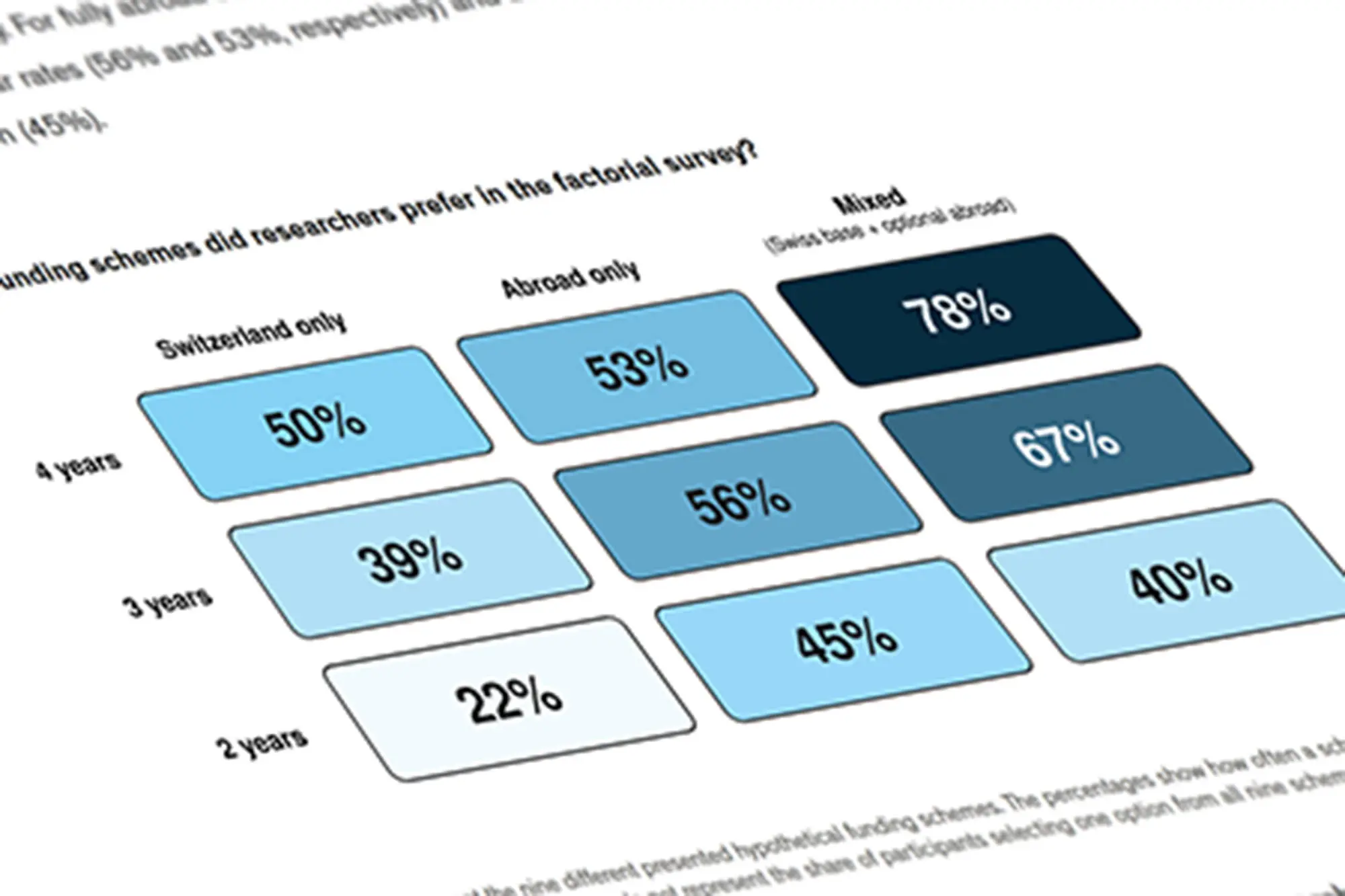
This reform reflects the SNSF’s broader commitment to evidence-informed policy. Alongside evaluations, consultations and administrative data, the SNSF’s Career Tracker Cohorts study (CTCs) has provided a critical evidence base for the reform. By following researchers after they apply for SNSF career funding, the CTCs show how their careers develop and reveal patterns that application data alone cannot capture. These insights revealed some of the weaknesses of the current system and so shaped the development of the new Postdoc Grant. In addition, the study allowed the SNSF to take researchers’ experiences and preferences into account when developing this new funding model.