Innovation with a bite: the technology behind Planted
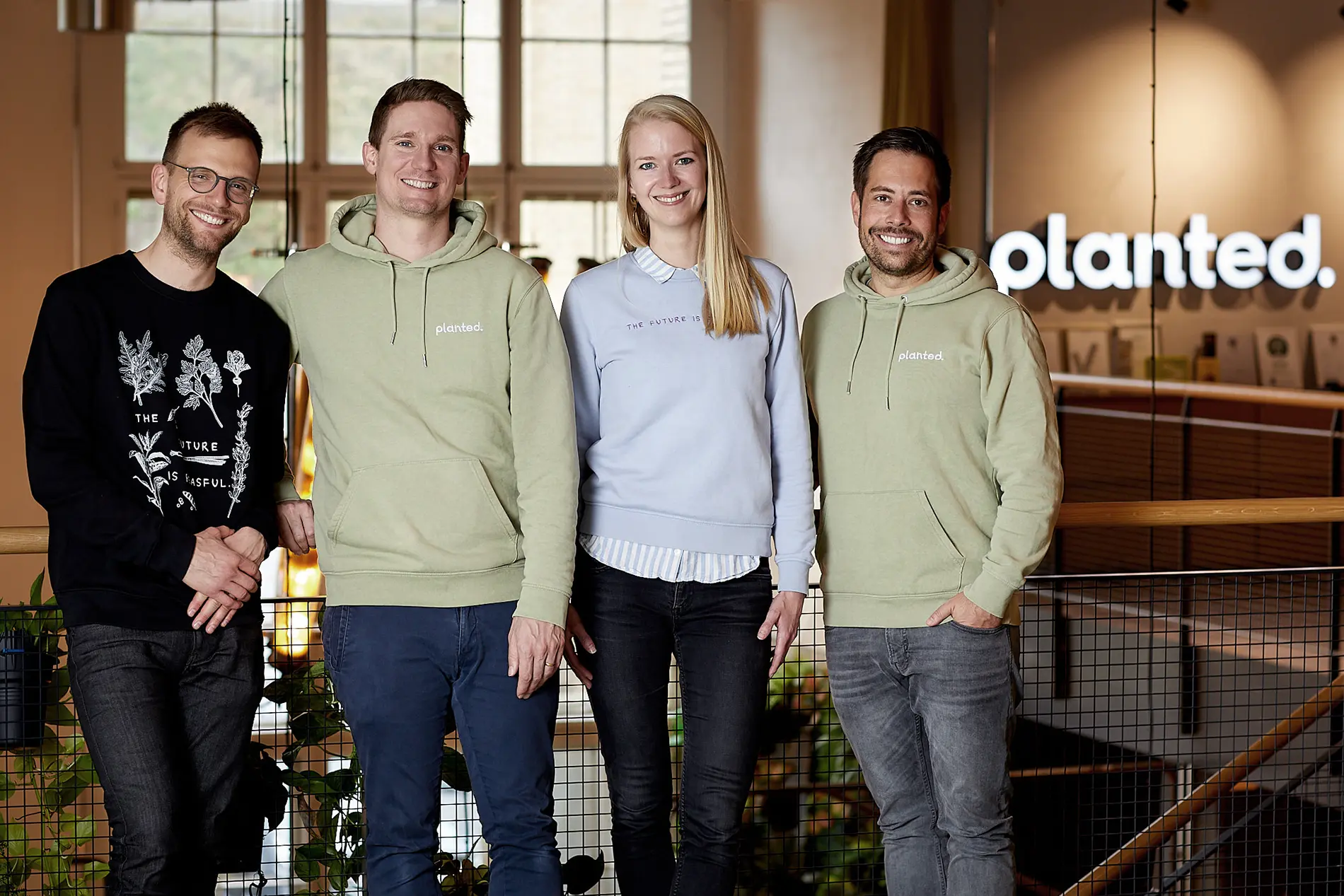
Five university graduates had the vision to create a plant-based meat substitute without additives. Today, Planted processes over 20 tonnes of plant-based proteins into vegan burgers, steaks, sausages and schnitzels every day.
Every year, 340 million tonnes of meat are produced worldwide, and the trend is only rising. The consequences are dramatic: This fattening industry emits enormous amounts of greenhouse gases and strains the global water balance. Rapid rearing comes at the expense of animal welfare, and excessive meat consumption can have health consequences.
Ecology, animal welfare and health: "For these three reasons, more and more people are meeting their vital protein needs with plant-based foods," says Lukas Böni, co-founder and Head of Innovation at the Zurich-based foodtech company Planted.
In the 2010s, consumer demand gave rise to a wide range of alternative meat products made from protein-rich legumes such as soy, beans, peas and lentils. What didn't exist back then, however, was a meat substitute without chemical additives, which are used to improve the texture or extend the shelf life, for example.
"We wanted to change that," recounts food technologist Böni. Six months after completing his doctorate, he founded the company Planted, together with his ETH colleagues Eric Stirnemann and Judith Wemmer as well as two economists Christoph Jenny and Pascal Bieri.
Yellow peas, oil, water and salt
The first product was based on Eric Stirnemann's PhD thesis at the Institute of Food and Nutritional Sciences at ETH Zurich. The title was "Viscoelastic flow of vegetable protein melts under high moisture extrusion conditions". Stirnemann's basic research made it possible to extrude (press through an opening) a mass from yellow peas, water, rapeseed oil and salt that resembled a piece of chicken in terms of colour, bite and consistency.
In May 2020 – just a few months after the company was founded – Coop added "Planted Chicken" to its shelves. Planted's vegan meat is now available in more than 6,500 restaurants and over 10,000 retail outlets across Europe.
For the five young entrepreneurs, however, one thing was clear: More had to come. The method that would lead to new products in the medium term was also undisputed: fermentation, a biochemical process that people have been using for thousands of years and which has lost none of its importance.
Refining with microorganisms
In fact, fermentation is one of the most important processes in the food industry, alongside heating. Foods as diverse as sauerkraut, beer, cheese, chocolate, yoghurt and wine owe their flavours and textures to at least one refinement step involving bacteria and other microorganisms.
Böni was already studying microorganisms as a teenager. He even presented his teacher with a homemade chocolate as his final school project. In spring 2021, he started developing a meat substitute together with Patrick Rühs, who at the time was the Scientific Director of Planted and is now Professor at the Institute of Food Science, Nutrition and Health at ETH Zurich. The two investigated how extruded protein mixtures react to fermentation and combined the two processes into a new method to refine flavour and texture.
When faced with questions that exceeded the scientific capabilities of a start-up, the Planted experts sought cooperation with universities, such as the Zurich University of Applied Sciences (ZHAW).
In a joint project with the Food Biotechnology Research Group at the ZHAW in Wädenswil, entire collections of microorganisms were analysed. The goal was to detect fermenting bacteria that convert undesirable flavours into pleasant aromas.
Each fermentation product was inspected; first by eye and by nose. If something looked or smelled promising, it was sent to the lab. There, the researchers analysed the microbiological composition, pH value, juiciness, salt content and decomposition products.
Internationally recognised research
"We have a lot of foodtech expertise in the immediate vicinity," says Lukas Böni. The nutrition and food sciences institutes of the ZHAW in Wädenswil, ETH Zurich and the University of Fribourg form an internationally known innovation cluster. According to Böni, an extensive network has developed over the years: "This helps us to see what our research colleagues have in the pipeline."
The breakthrough came in March 2023. A small piece of fermented red vegetable meat made from soy met the high standards in terms of colour, juiciness and texture.
Now it was the Planted chefs' turn to take over. The foodtech company operates three commercial kitchens at its headquarters on the former Maggi production site in Kemptthal, Zurich. The prototype was subjected to a taste test. A series of tastings with the management went brilliantly.
"It was a wow moment for all of us," recalls Böni. Shortly afterwards, the management decided to focus its financial and human resources on the new "Planted Steak".
Strong growth in the core markets
The efforts paid off: The following year, Coop became the first retailer to include plant-based steak in its product range. This was followed by launches at Rewe and Kaufland in Germany, Tesco in the UK, Carrefour in France, Albert Heijn in the Netherlands and Migros in Switzerland. This summer, a new fermentation plant began operations in Memmingen, Bavaria. Production is constantly being ramped up. "Planted Steak" already accounts for around 20 percent of sales.
Planted has so far been financed by so-called "business angels" and venture capitalists. The investors come from Switzerland, Europe and the USA. The team has raised a total of 115 million Swiss francs in several funding rounds.
As of the end of 2025, the five founders have created 200 jobs. The workforce produces around 20 tonnes of alternative proteins every day. The task now is to take advantage of the technological lead to establish Planted as an innovation leader across all of Europe.
Meanwhile, food technician Böni continues to go back and forth between the lab and the kitchen. Up next is a fermented cold cut. Experiments with bacteria and molds once again form the basis.
Links
- Basic research today – Innovation tomorrow
- Download without emblem image for editorial use. Caption: Planted Executive Board (from left to right): Lukas Böni, Christoph Jenny, Judith Wemmer and Pascal Bieri. © Courtesy of Planted / SNSF (JPEG)
- Download with emblem image for editorial use. Caption: Planted Executive Board (from left to right): Lukas Böni, Christoph Jenny, Judith Wemmer and Pascal Bieri. © Courtesy of Planted / SNSF (JPEG)