Only one in ten men who want to work part-time actually makes the switch
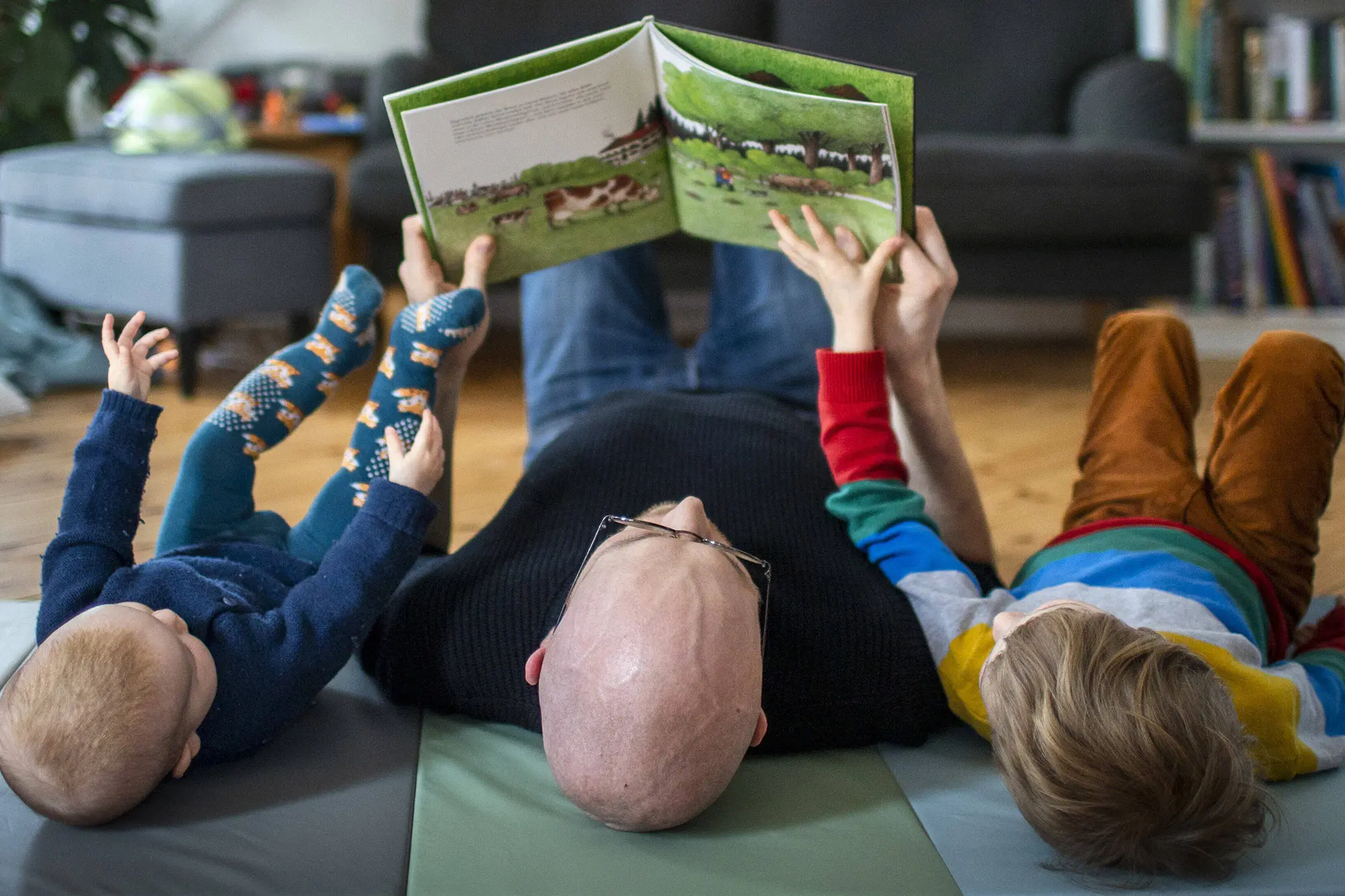
A study funded by the SNSF examined the voluntary increase in part-time work amongst men in Switzerland. Both social norms and institutional factors play a part in this phenomenon.
Forty percent of the working population in Switzerland works part-time, according to figures from the Federal Statistical Office (FSO) for 2025. Women account for the lion’s share of this figure – 60 percent of women in the workforce are employed part-time – while more than one in five men work part-time. These figures place Switzerland in second place amongst the 38 countries of the Organisation for Economic Co-operation and Development (OECD) in terms of part-time work, just behind the Netherlands.
With support from the SNSF, Jan Müller has investigated which factors influence men’s preference for part-time work and their transition to this way of working.
Tracking changes in the professional landscape over 16 years
Müller, a sociologist based at the University of Zurich and Youngjoo Cha, a professor at Indiana University Bloomington (United States), analysed data from the FSO’s Swiss Labour Force Survey, the Swiss Household Panel (University of Lausanne) and the Swiss Job Market Monitor (SJMM, University of Zurich). Their study brings together these statistics and surveys to investigate the social and occupational context. It covers a period of 16 years, from 2004 to 2020, which is long enough to observe the gradual evolution of working standards and arrangements.
At the individual level, the main variables are full-time or part-time employment and a preference for one or the other. Sociodemographic information such as age, the partner’s employment status and salary was included.
Job vacancies listed in the SJMM were also analysed to examine workplace norms and arrangements. This analysis, combined with responses from workers in the Swiss Household Panel, made it possible to calculate, for each occupation and each observation period, scores for "work devotion expectation", "work-life balance support" and attitudes towards "male breadwinner norms".
Few transitions, but still more than elsewhere
This longitudinal database shows that nearly ten percent of full-time workers develop a preference for part-time work each year. "That’s a significant amount," says Müller. "At the same time, however, only 10 percent of those who say they would prefer to work part-time whilst currently working full-time actually take the step of reducing their hours. That’s not very many."
Despite this low transition rate, the proportion of men working part-time is high in Switzerland relative to international standards. And it has doubled since 2000, rising from around 10 percent to over 20 percent. Across the OECD, these same figures have risen only slightly – from just over 8 percent to less than 13 percent between 2000 and 2025.
Müller’s study helps us to understand the factors influencing attitudes towards part-time work. Unsurprisingly, in occupations that have long been characterised by male breadwinner norms and by a strong devotion to work, few men develop a preference for part-time work or voluntarily transition into part-time employment. Conversely, their numbers are growing in occupations where support for a healthy work-life balance is increasing.
Aligning aspirations and reality
The results illustrate the impact of changes in the broader context, for example in medicine. There has been an increase in the number of male doctors switching to part-time work. This is indeed one of the professions where norms have changed the most, with the traditional male breadwinner norm receding and greater emphasis being placed on supporting a healthy work-life balance. "It surprised me in a job with so much overtime," says Müller. "This trend may be partly linked to the increasing number of women in the profession."
He makes no secret of the limitations of this study. It focuses solely on men who were initially working full-time – a group that is relatively well-off compared to under- or unemployed men. And it is limited by the reliably available data for the 16-year period under consideration.
However, the study sheds light on the factors driving the rise in voluntary part-time work amongst men and emphasises that a shift in social norms has to take place alongside institutional changes to make this possible. Müller expects that the reduction in the stigma surrounding it – which, for the time being, has been observed mainly amongst the most privileged of the privileged workers – will contribute to its wider adoption.
He goes on to say that, in his view, part-time work is not inherently better than full-time work. But he is convinced that when people are able to follow their preferences, the result is less stress and greater equality.
Expanding part-time work rather than full-time work for all
In addition to the points highlighted in this study, the sociologist emphasises that the Swiss context and culture are particularly conducive to part-time work.
Indeed, the nearly 42 weekly working hours typical of a full-time employee in Switzerland exceed the OECD averages. Müller believes that this renders reducing working hours an attractive option that, given the high wages, is often more financially viable than elsewhere.
He also highlights the influence of the prevailing family model in Switzerland, where women continue to shoulder the bulk of domestic and care responsibilities alongside their paid work. These factors have historically helped to establish part-time work as the norm and to develop a favourable legal framework: "By international standards, Swiss case law offers relatively strong protection to part-time workers," explains Müller. "Contracts are often just as secure as those for full-time positions, which is not the case in other countries."
Finally, he mentions the different approach taken by the Scandinavian countries, "where society is organised in such a way that both parents can work full-time. In Switzerland, the trend is towards a system where women continue to work part-time, but men are starting to do so as well."