A new chemistry for ointments, creams and lotions – thanks to basic research
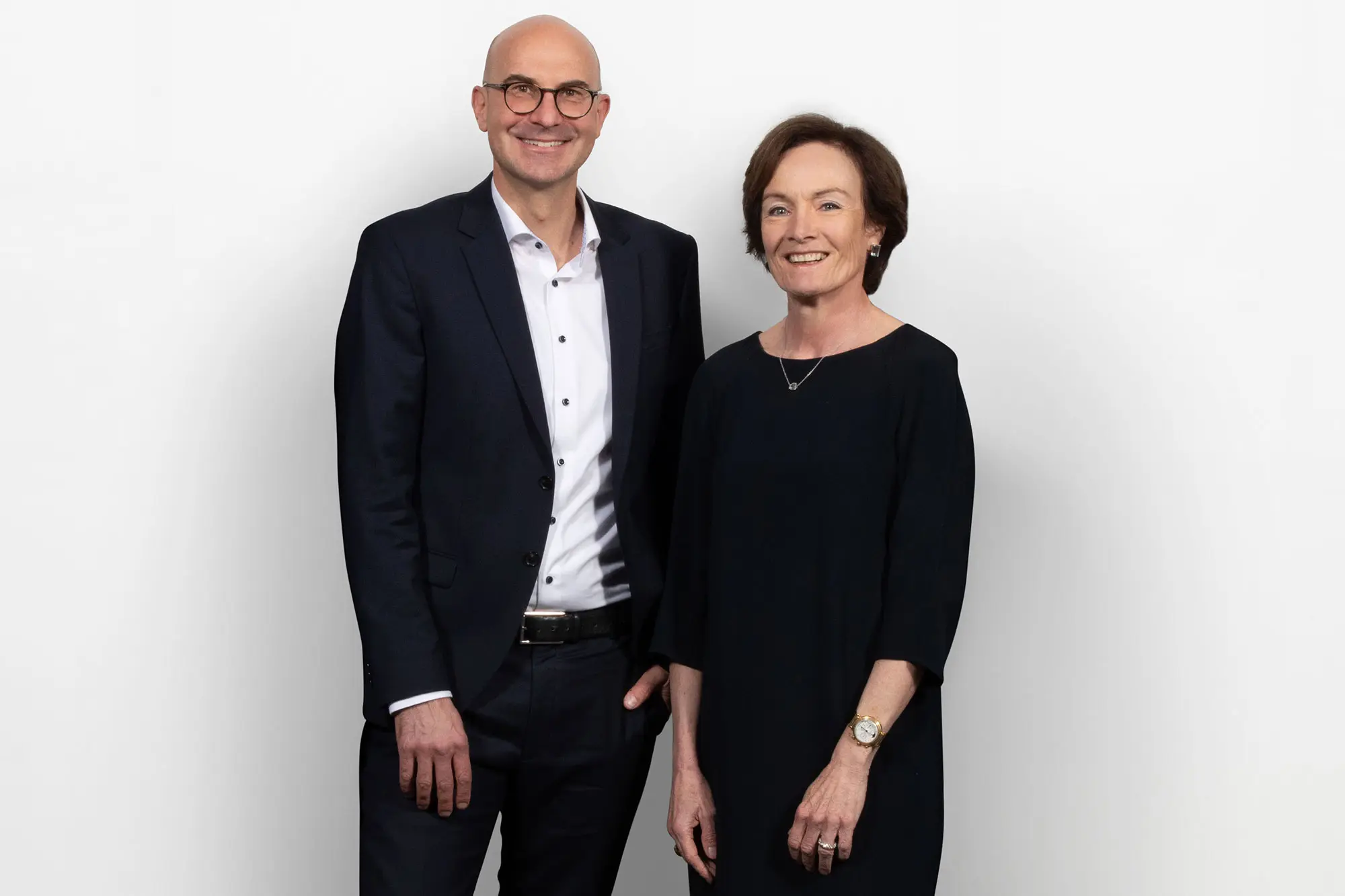
From basic research to the global cosmetics market. The St. Gallen-based conglomerate Weidmann is building up a new business in microfibrillated cellulose. The idea was born of pure curiosity.
Chemist Florentine Hilty is excited: "Our cellulose gel is a very cool material." What she finds particularly fascinating is that the milky-white gel has thixotropic properties. In other words, when it is shaken or agitated it becomes thin, and when left at rest it thickens again. "This makes it suitable as a natural additive for cosmetics of all kinds", says Hilty. The scientist heads the research and development department at Weidmann Fiber Technology, the youngest of the Weidmann Group's three divisions.
Founded in 1877, the conglomerate is a landmark in Rapperswil. Around 500 people are employed at the headquarters near the town’s railway station.
An understated world leader in its field
Outside Rapperswil the company is hardly known, although it is the world's leading manufacturer of insulation systems for high-performance transformers used in power plants, industrial facilities and data centres. The majority of Weidmann's 3,700 employees worldwide manufacture semi-finished products and components for transformer manufacturers under the name Weidmann Electrical Technology.
The insulation components are made from compressed cellulose, so-called pressboard. However, Weidmann was already experimenting with insulating plastics in the late 1920s. This is what gave rise to the injection moulding business and ultimately the Weidmann Medical Technology division, which produces pipettes and other high-precision medical consumables for the global market.
"In this respect, the Weidmann Fiber Technology department is already the second spin-off of the core business”, explains Weidmann CEO Maximilian Veit.
Research partnership with Empa
A cooperation with Empa provided the impetus for the latest innovation. The contact person at Empa was its current director Tanja Zimmermann, who at the time was head of the laboratory for cellulose and wood materials.
Cellulose fibres are always pre-milled for use. This is standard practice. But once, out of pure curiosity, the researchers put the material through the mills a second and third time. Florentine Hilty describes what happened next: "Micro- and nanoscale networks form in the fibrils of the milled cellulose fibres, which still have enough free H-bridges to bind water." The result is a gel made of microfibrillated cellulose (MFC) with a water content of 97 percent.
In 2016, Weidmann set up the first R&D project focusing on MFC with Empa. In 2019, the project was given its own organisational foundation: Weidmann Fiber Technology. And in 2023, Hilty joined the now seven-member team as the new head of research.
Target market: the cosmetics industry
The innovative gel has a wide range of applications: Market research suggests areas such as energy and coating technology. "However, our focus is on the production of cosmetics, where we want to become a key supplier," explains Head of Research Hilty.
This gel is a chemical additive that ensures the desired flow and deformation behaviour of ointments and creams. Experts speak of rheological effects such as thixotropism, which causes a material to become temporarily thin under the influence of force.
The mass percent of these additives is between five and ten percent. Today, they are almost exclusively obtained from the petrochemical propylene. In the beauty and personal care market segment alone, global consumption totals around half a million tonnes per year.
"Our gel offers the industry a fossil-free alternative", says Florentine Hilty. An alternative that is competitively priced and also offers functional advantages. Tests on sun creams show that MFCs distribute the protective particles better than conventional additives, thereby increasing the protection factor.
Weidmann is positioning itself as a development partner in an industry that is under pressure: on the one hand, due to the ever-stricter regulation of additives, and on the other, due to changing consumer awareness.
Commercialisation is under way
To date, the Group has invested tens of millions in its fibre technology. Dozens of pilot projects are currently under way along the value chain, from cosmetics development to contract production and marketing.
Maximilian Veit points to a row of metre-high cellulose mills. Insulators for export used to be manufactured in these halls. Today, production takes place abroad – directly on the customer's premises. "That's why we have space here for new value-adding activities”, says Veit.
The mills are only running in test mode. The batches are continuously analysed in a specially built test laboratory. But Weidmann is ready to deliver. "Once the pilot projects result in large batches, we will ramp up our facilities," says the CEO.
The most important competitors on the MFC market are Scandinavian paper manufacturers. They benefit from direct funding from the host country and the EU for R&D projects that promote sustainability.
Universities as a locational advantage
The Weidmann Group does not have such funding. This disadvantage must be compensated for – in particular through close collaboration with academic institutions such as the Bern University of Applied Sciences BFH, School of Architecture, Wood and Civil Engineering in Biel/Bienne. Students there are exploring the potential of cellulose gel in adhesives and wall cladding and it is regularly the subject of bachelor's and master's theses.
Projects are also being conducted with the Federal Office for the Environment (FOEN). For example, scientists at Weidmann analysed what would be necessary to obtain the raw material cellulose from local beech in the future. "This would once again significantly improve the environmental footprint of our gels", says Florentine Hilty.
Links
- Basic research today – Innovation tomorrow
- Download image for editorial use. Caption: Maximilian Veit, CEO, Franziska Tschudi Sauber, Chair of the Board of Directors, Weidmann Group. © Weidmann Group (JPEG)
- Download image with key visual for editorial use. Caption: Maximilian Veit, CEO, Franziska Tschudi Sauber, Chair of the Board of Directors, Weidmann Group. © Weidmann Group / SNSF (JPEG)